Our Platform
The distinctive feature of our technology is the interplay of the unique properties of the all-d-peptide compound class and the novel anti-oligomeric mode of action. We leverage our potent discovery and optimization platform to develop a novel class of orally available therapeutics designed to counteract the underlying biology of neurodegenerative disorders.
Drug Discovery Platform
Our Drug Discovery Platform consists of key components that allow us to identify, and design tailored compounds targeting a broad spectrum of toxic oligomers of interest. In addition to the mirror-image-phage-display-technology for screening, we use our extensive experience in rational design to optimize peptides in terms of efficacy, stability, and penetration of the blood-brain barrier and cell membranes. From the very beginning, we focus on the physicochemical properties of new drug candidates and conduct the majority of development activities in-house to ensure quality, control and throughput.
Our drug candidates are without exception all-d-peptides.
Targeting the protein aggregates that drive neurodegeneration
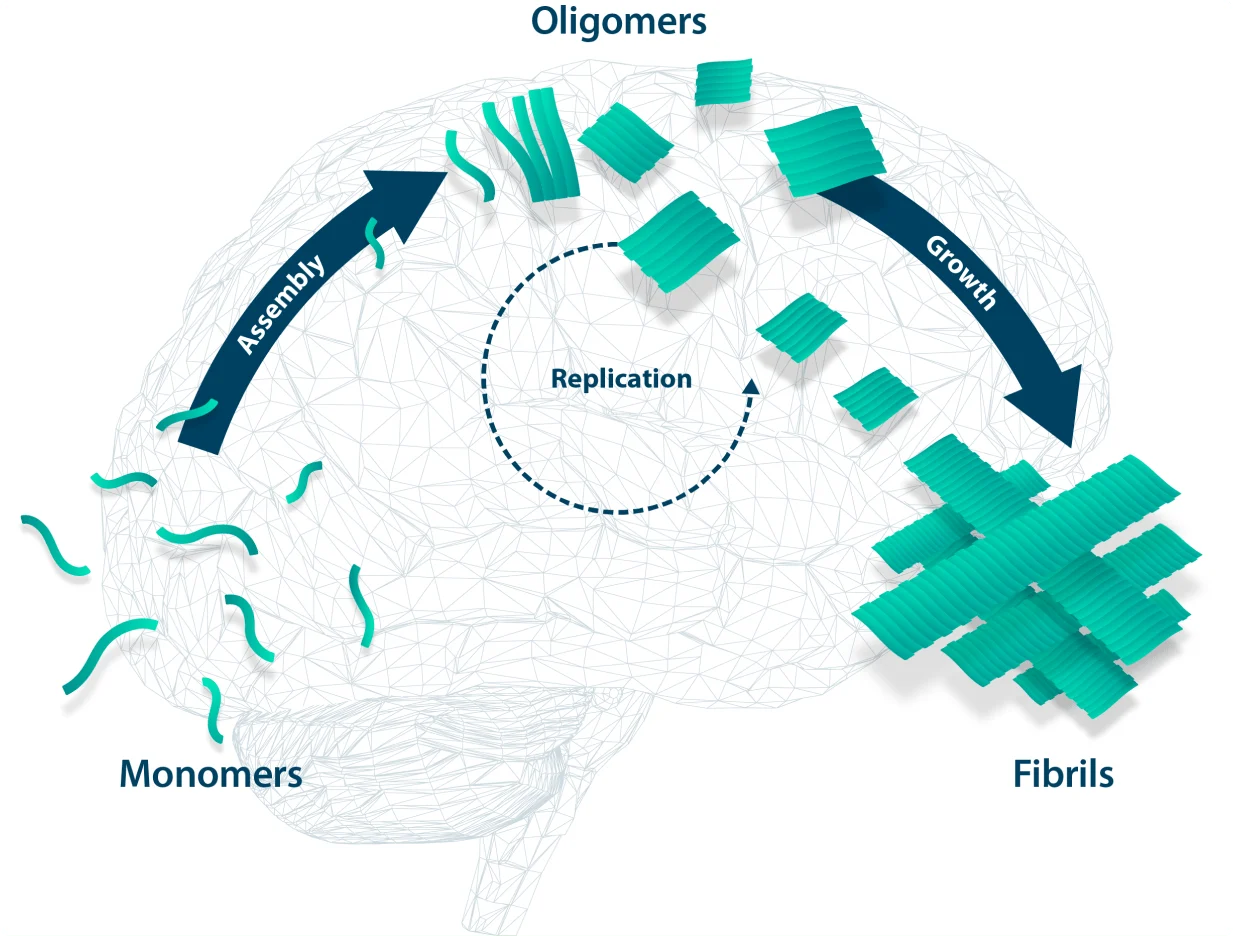
Neurodegenerative diseases are driven by the aggregation of misfolded disease-specific proteins, a central pathological process shared across indications such as Alzheimer’s and Parkinson’s disease. In their physiological state, these proteins are usually present as monomers that perform essential biological functions.
If the monomers change into a disease-promoting conformation and aggregate, harmful oligomers are formed. These have toxic properties and damage neurons and other cells in the brain. As aggregation progresses, insoluble fibrils and plaques may form; however, these late-stage aggregates are increasingly viewed as downstream byproducts rather than the main mediators of neurotoxicity.
In contrast, oligomers have the property that they are soluble, allowing them to migrate and spread throughout the brain tissue. They act as a pathological template for other monomers, leading to increased formation of more oligomers and amplifying aggregation. This drives the progressive expansion of pathological processes in the brain, neuronal death, leading to neuronal loss and the clinical deterioration observed in neurodegenerative disorders.
MoA: Detangling toxic oligomers at the root of disease
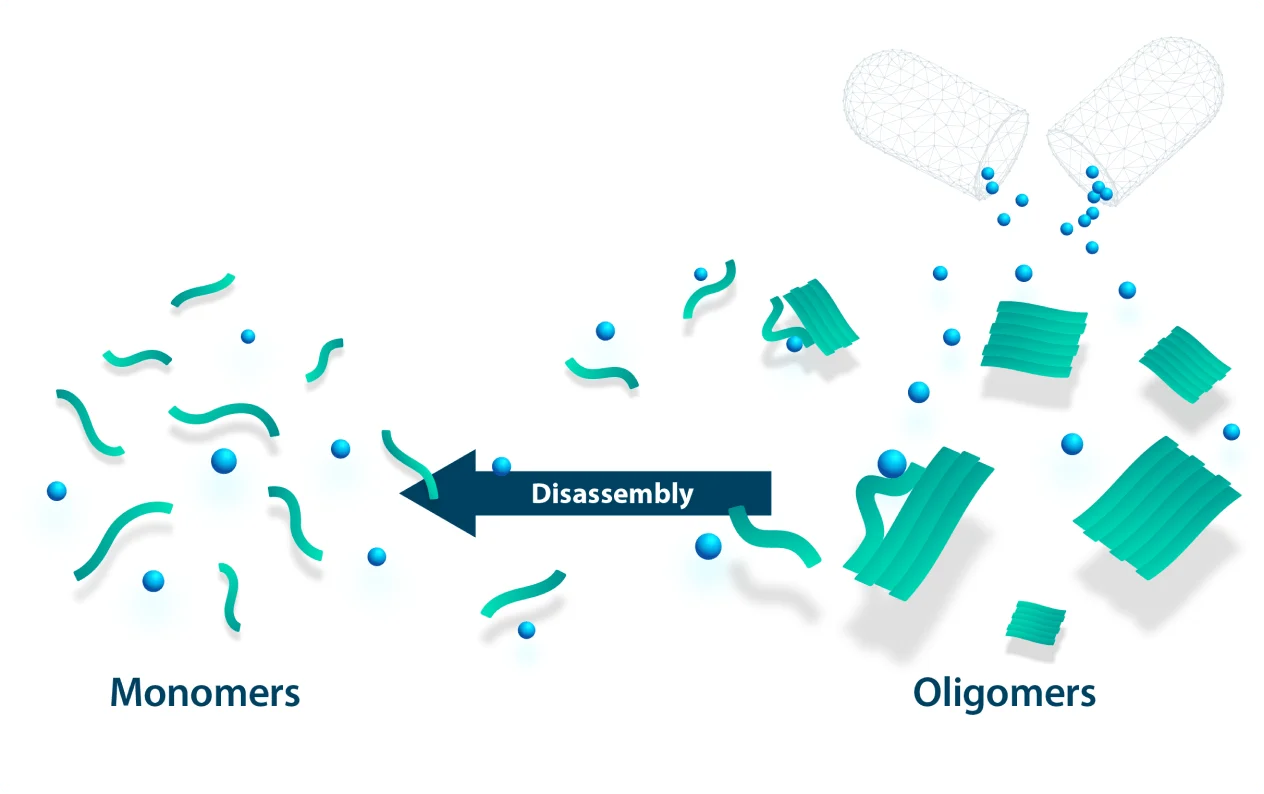
Priavoid’s all-d-peptide compounds are designed to target and disintegrate these neurotoxic oligomer species in the brain tissue. Due to their specific structural properties, these compounds are invisible to the immune system (non-immunogenic) and can effectively cross the blood-brain barrier as well as enter target cells to reach their site of action. Acting as detanglers, the compounds selectively bind to their neurotoxic target oligomers and dissolve them into harmless monomers. Thereby, they clear the brain of these disease-specific aggregates and prevent their further spread and proliferation, enabling the damaged neurons to recover. By directly eliminating the neurotoxic oligomeric species, Priavoid’s approach aims to interrupt disease progression at its biological root.
This mode of action can be tailored to many aggregating targets, enabling application across multiple protein misfolding diseases. The platform therefore supports the systematic development of targeted, disease-specific therapies for a broad range of neurodegenerative diseases.